Skip to content

Best Workflow Automation Tools in 2026

By Toolradar Team · Updated March 2026

No-code workflow automation platforms

Key Takeaways
  • Evisort is our #1 pick for workflow automation in 2026.
  • We analyzed 709 workflow automation tools to create this ranking.
  • 4 tools offer free plans, perfect for getting started.

How the Top Workflow Automation Tools Compare

In 2026, Evisort leads the workflow automation category with a 3.5/5 rating, narrowly edging out Bynder (4.2/5). Evisort — AI-powered contract management software for end-to-end contract lifecycle management..

Pricing varies significantly among the top picks: Zapier (freemium (free tier available)) offers free access, while Evisort and Bynder and Rippling require a paid subscription. Teams on a budget should start with Zapier, which delivers strong value despite its free tier.

1
Evisort logo

Evisort

AI-powered contract management software for end-to-end contract lifecycle management.

Paid4.8/519 ratings

Evisort, now acquired by Workday, offers a complete, AI-native platform for comprehensive contract lifecycle management (CLM). It leverages the first large language model built specifically for contracts to help businesses gain deep insights into their agreements. The platform is designed for savvy contracting professionals at global brands, enabling them to surface risks by automatically identifying and fixing problematic language, spot opportunities by finding untapped revenue potential and cost savings, and track obligations to manage relationships and improve forecasting. Evisort aims to drive value across businesses by automating compliance, customizing business processes, and eliminating manual effort, leading to significant ROI. It provides document generation capabilities, workflows, and AI in a user-friendly interface. Evisort differentiates itself by building proprietary AI, including its contract-specific LLM, for better accuracy, security, and control, rather than licensing generic third-party AI. This makes it a future-proof investment for companies looking to enhance their contract intelligence and management.

2
Bynder logo

Bynder

Digital asset management

Paid4.5/51,357 ratings

Bynder is an enterprise digital asset management (DAM) platform that helps global brands organize, manage, and distribute their creative content across teams and channels. Named a Leader in the 2025 Gartner Magic Quadrant for DAM, Bynder serves marketing teams at companies who need centralized control over brand assets with powerful search, collaboration, and distribution capabilities. The platform features AI-powered asset management with automatic tagging, smart search, and content recommendations. Bynder supports the entire content lifecycle from creation through distribution, including creative project workflows, approval processes, and brand guidelines enforcement. The customizable brand portals enable controlled sharing with external partners and agencies. Bynder integrates with 145+ marketing tools out of the box, including Adobe Creative Cloud, Salesforce, HubSpot, and major CMS platforms. The platform includes analytics for tracking asset usage and ROI, helping teams understand which content performs best and where gaps exist in their asset library.

3
Zapier logo

Zapier

Automate your work

Freemium4.3/52,440 ratings

Zapier connects 8,000+ apps to automate workflows without code. Build multi-step Zaps that trigger actions across your entire stack — from lead capture to customer support to internal ops. Core products include Zaps (workflow automation), Tables (built-in database), Forms (input capture), and Canvas (visual workflow planning). AI features let you build custom agents and chatbots that work across your connected apps. Used by teams at Nvidia, Airbnb, Meta, and Disney. Free tier includes 100 tasks/month with basic Zaps. Pro plans start at $19.99/month for 750 tasks with multi-step workflows, filters, and formatters. Team plans ($69/month) add shared workspaces, SSO, and unlimited users. Zapier MCP (Model Context Protocol) lets AI assistants like Claude and ChatGPT trigger your Zaps directly, turning any automation into an AI-callable action.

4
Rippling logo

Rippling

Workforce management platform

Paid4.8/517,319 ratings

Rippling manages HR, IT, and finance in one platform. Employee systems unified—everything from payroll to device management. The integration is the strength. The management is unified. The automation connects systems. Companies wanting unified employee systems choose Rippling for connected HR and IT.

5
Smartling logo

Smartling

End-to-end localization & translation services for global growth powered by AI.

Paid4.1/5694 ratings

Smartling is an AI-powered translation system that provides end-to-end localization and translation services. It leverages AI to select appropriate translation models, apply context automatically, and continuously improve quality as content scales. The platform is designed to unify translation efforts across various content types, including marketing content, websites, help centers, learning & development materials, and software/mobile applications. Smartling offers extensive automation capabilities, integrating with over 50 pre-built connectors, APIs, and a translation proxy to connect with existing tech stacks. It centralizes translation efforts with unlimited users and in-platform collaboration tools, while also providing built-in review workflows, quality scoring, and reporting. The service combines AI translation with professional linguists and project managers to review output, manage exceptions, and guarantee quality, offering a starting cost of $0.005 per word and claiming significant cost savings and automation rates. It is suitable for global brands looking to streamline their localization process, reduce costs, and accelerate content delivery across multiple languages and regions. Smartling supports a wide range of file types and content formats, including JSON, XML, HTML, Microsoft Word, Excel, PDFs, and mobile app strings. It integrates with popular CMSs (WordPress, Adobe Experience Manager, Contentful), CRMs (Salesforce, Zendesk), marketing tools (Marketo, HubSpot), and code repositories (GitHub, Bitbucket). The platform also boasts strong security and compliance, adhering to PCI, SOC 2, HIPAA, GDPR, HITRUST, and various ISO certifications.

6
Odoo logo

Odoo

All-in-one open-source business management software with a vast app ecosystem.

Freemium4.3/51,605 ratings

Odoo is an open-source suite of business management software tools designed to streamline and integrate various business operations. It offers a comprehensive collection of apps covering areas like CRM, accounting, sales, inventory, HR, project management, marketing, and more, all on a single platform. The product aims to provide an efficient and affordable solution for businesses of all sizes, from small to large enterprises, by simplifying processes and empowering employees with the right tools. Odoo emphasizes productivity with features like fast UI, reduced data entry, and smart AI. It offers two editions: Community (100% free and open source) and Enterprise (with extra apps, infrastructure, and professional services). The platform is highly customizable through Odoo Studio and boasts over 40,000 community apps. Odoo promotes no vendor lock-in, providing source code and flexibility in hosting, along with transparent, single-price-per-user pricing. Odoo's value proposition includes significant cost savings compared to using multiple disparate systems, improved operational efficiency, and a focus on empowering businesses to grow. It provides extensive support, hosting, and maintenance with all plans, and offers 'Success Packs' for implementation services, training, and customization for those needing guided setup.

7
Alfred logo

Alfred

Productivity app for Mac with custom workflows and shortcuts

Freemium4.5/534 ratings

Alfred replaces the basic Mac Spotlight with something far more powerful. Type a few characters to launch apps, find files, search the web, or run custom workflows that automate your daily tasks. Workflows are where Alfred shines. Chain actions together—look up a word, convert currencies, manage snippets, control apps—triggered by simple keywords. The community shares thousands of ready-made workflows. Power users on Mac consider Alfred essential. Once you experience searching and acting on everything from the keyboard, reaching for the mouse feels slow.

8
Kinaxis logo

Kinaxis

AI-powered supply chain orchestration for agile, resilient, and smarter decision-making.

Paid4.2/580 ratings

Kinaxis provides agile supply chain management solutions, leveraging AI to connect people, processes, and data across planning, procurement, manufacturing, and logistics. It helps businesses anticipate disruptions, automate decisions, and maintain supply chain harmony through real-time AI insights. The platform offers a comprehensive suite of solutions including AI Agents, Control Tower, S&OP, Demand, Supply, Inventory, Scheduling, Order Management, Transportation, and Returns. Designed for leading companies across various industries such as Aerospace & Defense, Automotive, Chemical, Consumer Products, High-tech & Electronics, Industrial, and Life Sciences, Kinaxis aims to drive smarter decisions, reduce risk, and achieve transformative supply chain outcomes. It enables users to gain end-to-end transparency, plan scenarios, predict demand with confidence, minimize waste, and orchestrate S&OP, ultimately improving on-time, in-full performance, forecast accuracy, and reducing expedite and inventory costs. Kinaxis is particularly adept at addressing industry-specific challenges, such as managing constant innovations and packaging changes in consumer products, ensuring product freshness in food and beverage, or planning for timely delivery in apparel. Its AI-powered Maestro Agents understand the supply chain context, turning questions into confident actions and integrating AI directly into planning processes.

9
DocuSign logo

DocuSign

Electronic signature and CLM

Paid4.6/511,748 ratings

DocuSign is the global leader in electronic signatures and agreement management. Sign and send documents for signature from anywhere. Powerful workflows route documents through approval chains. Agreement Cloud extends beyond signatures to contract management. Integrations with Salesforce, Microsoft, Google, and hundreds more. The e-signature standard trusted by enterprises worldwide for critical agreements.

10
Slack logo

Slack

Where work happens

Freemium4.5/561,908 ratings

Slack is a channel-based messaging platform built for workplace communication and collaboration. Acquired by Salesforce in 2021, it serves as a central hub where teams organize conversations by topic, project, or department in dedicated channels. Core capabilities include real-time messaging, audio/video huddles with AI-powered note-taking, Canvas documents, workflow automation via a no-code builder, and an enterprise search that spans connected third-party apps. Slack Connect enables secure communication with external partners and clients. The platform integrates with over 2,600 apps including Google Workspace, Salesforce CRM, Jira, and GitHub. Slack AI provides channel summaries, daily recaps, and thread catch-ups. Used by organizations from startups to Fortune 100 companies, the platform processes over 700 million messages daily, with 4 million Slack Connect users collaborating across organizations weekly.

Best Workflow Automation For

What is Workflow Automation Software?

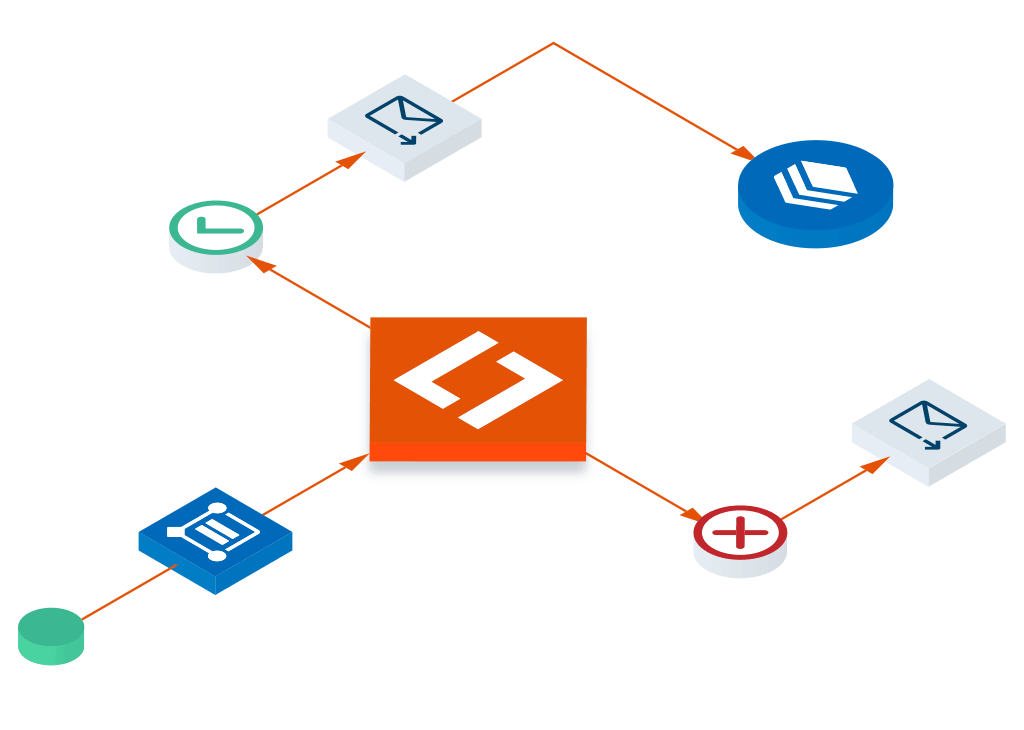
Workflow automation tools connect your apps and automate repetitive business processes without writing code. The best workflow automation tools in 2026 let you build triggers, actions, and conditions that move data between systems, send notifications, and execute multi-step processes automatically.

Think of every manual task your team does repeatedly: copying data from a form into a spreadsheet, sending a Slack message when a deal closes, creating tasks when a customer submits a support ticket. Automation tools handle these workflows so your team can focus on work that actually requires thinking.

The category has expanded beyond simple app connectors. Modern platforms offer conditional logic, error handling, AI-powered decision steps, and even database capabilities. The line between workflow automation and full application development is getting blurry.

Editor's Take

“After evaluating 10 workflow automation software? tools, Evisort stands out as our top pick, ahead of Bynder. For budget-conscious teams, Zapier (free tier available) delivers strong value. The competition is fierce — the gap between top tools is narrower than ever, so the best choice comes down to your team's specific workflow and priorities.”

— Toolradar Editorial Team · March 2026

Key Data Points

10+
Tools analyzed on Toolradar
4
Offer free or freemium plans
2026
Last updated

According to Toolradar's analysis across 10+ products, 40% offer free or freemium plans. Evisort leads the category based on features, user reviews, and overall value.

Essential Features in Workflow Automation Tools

Visual Workflow Builder

Drag-and-drop interface for building automations. The builder should be intuitive enough for non-technical users but powerful enough for complex multi-step workflows.

App Integrations

The number and depth of app connections matter. Check that your critical tools are supported with proper triggers and actions, not just basic webhooks.

Conditional Logic

If/then branching, filters, and routers that let automations make decisions. Without this, you're limited to linear sequences.

Error Handling

What happens when an automation fails? Look for retry logic, error notifications, and execution logs. Silent failures are worse than no automation.

Scheduling & Triggers

Time-based schedules, webhook triggers, and event-based triggers from connected apps. Flexible triggering determines what you can actually automate.

Data Transformation

Format dates, parse JSON, split text, calculate values. Real-world data is messy—your automation tool needs to clean it up between steps.

Who Uses Workflow Automation Tools?

Automation tools serve anyone who's tired of repetitive manual processes, from solo operators to enterprise IT:

Operations teams: Automating cross-departmental processes like lead handoffs, order processing, and approval chains.
Marketing teams: Connecting lead forms to CRMs, syncing email lists, and triggering campaigns based on user behavior.
Small business owners: Replacing manual data entry and notification tasks that eat into productive hours.
IT departments: Building internal automations for provisioning, incident routing, and data synchronization between enterprise systems.

How to Choose the Right Workflow Automation Tool

The right platform depends on your technical comfort level, integration needs, and automation complexity. Consider these factors:

  1. 1Complexity of your workflows. Simple two-step automations? Zapier works fine. Multi-step workflows with branching logic? Look at Make or n8n. Enterprise-grade process orchestration? Consider Power Automate or Workato.
  2. 2Pricing model. Most tools charge per task/execution. Calculate your expected volume—a workflow that runs 10,000 times a month costs very differently across platforms. Some charge per workflow instead.
  3. 3Self-hosted vs. cloud. n8n and Activepieces offer self-hosted options for teams with data sovereignty requirements. Cloud-only tools like Zapier are easier to start with but give you less control.
  4. 4Learning curve. Zapier's interface is simple but limiting for complex automations. Make offers more power but takes longer to learn. Match the tool to who will actually build and maintain the automations.
  5. 5Reliability and monitoring. Automations that fail silently create worse problems than manual processes. Check execution logs, error alerting, and uptime history before committing.

Workflow Automation Market in 2026

AI steps inside automations are the biggest trend—tools now offer AI-powered decision nodes, content generation, and data classification within workflows. n8n has surged in popularity as the open-source alternative. Zapier has expanded beyond automation into tables and interfaces, becoming more of a platform. Microsoft Power Automate dominates enterprises already on Microsoft 365. The market is consolidating around a few major players, but open-source alternatives are growing fast.

Related Guides

Frequently Asked Questions

What is the best workflow automation tool for beginners?

Zapier is the most beginner-friendly option with its simple trigger-action model and extensive app library. It's easy to set up basic automations in minutes. For users who want more power without much more complexity, Make (formerly Integromat) offers a good middle ground with its visual builder.

How much do workflow automation tools cost?

Free tiers are common but limited (usually 100-750 tasks/month). Paid plans start around $20/month for 750-2,000 tasks. Power users and businesses typically spend $50-200/month. Enterprise plans with advanced features and higher volumes run $500+/month. Self-hosted tools like n8n can be free if you host them yourself.

What's the difference between Zapier and Make?

Zapier is simpler and has more integrations (6,000+), but charges per task and limits workflow complexity on lower plans. Make offers more complex workflow capabilities (branching, error handling, iterators) at lower per-task costs, but has a steeper learning curve. Make is typically better for complex, high-volume automations.

Can workflow automation replace custom software development?

For many internal processes, yes. Tools like Make and n8n can build workflows that would have required custom code five years ago. But they have limits—high-throughput, real-time, or highly customized applications still benefit from proper development. Think of automation tools as covering the 80% of cases that don't need custom code.

Are no-code automation tools secure?

Major platforms (Zapier, Make, Power Automate) use encryption in transit and at rest, offer SOC 2 compliance, and provide granular access controls. Self-hosted options (n8n) let you keep data on your own infrastructure. The biggest security risk is usually misconfigured automations exposing data, not the platforms themselves.

Quick Facts About This Category

#1
Evisort
Top rated
4
Free Tools
With free or freemium plans
10
Tools Reviewed
In this category
2026
Last Updated
March

Our Ranking Methodology

At Toolradar, we combine editorial expertise with community insights:

40%
Editorial Analysis
Features, UX, innovation
30%
User Reviews
Real feedback from verified users
15%
Pricing Value
Cost vs. features offered
15%
Integrations
Ecosystem compatibility

Have experience with these tools?

Your review helps thousands of others make better decisions.

Write a Review