doola vs Mercury: Pricing and Ratings Compared (2026)
Entry prices and free plans as read on each vendor's pricing page, and user ratings as published on review sites, for doola and Mercury side by side. This page compares data; it is not a hands-on review.
On the data: On the data below, Mercury leads on a free plan. We do not name an overall winner for this pair.
Short on time? Here's the quick answer
- doola: best for you if
- You want a tool that consolidates multiple essential business services into one platform
- Mercury: best for you if
- You want a free tier before you commit
| At a Glance | 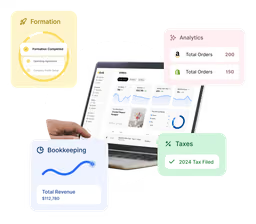 doola |  Mercury |
|---|---|---|
| Starts at | doola From $24.75/mo on the annual plan Starter plan | Mercury Free plan, paid from $35/mo Mercury Plus plan |
| Category | doola Finance Accounting | Mercury Finance Expense Management |
| Rating | doola No rating yet | Mercury 4.6 (182 reviews) G2 4.4 · Capterra 4.8 |
| Free plan | doola No | Mercury Yes |
| Watch out for | doola Nothing on file | Mercury Non-USD international wires carry a 1% currency exchange fee and non-USD card transactions a 3% fee |
| Website | doola | Mercury |
These entry prices are not on the same basis: some need a longer commitment than others. Each one is shown as its vendor sells it, and none is ranked against the others.
Choose doola or Mercury?
Choose doola if
- You want a tool that consolidates multiple essential business services into one platform
- You want a tool that simplifies complex legal and financial compliance for US businesses
Choose Mercury if
- You want a free tier before you commit
In-Depth Analysis
doola
The all-in-one financial platform for founders to form, manage, track, and automate their US business.
Starter is formation and compliance, not ongoing analytics/bookkeeping software.
Strengths
- Pro: Consolidates multiple essential business services into one platform.
- Pro: Simplifies complex legal and financial compliance for US businesses.
- Pro: Offers dedicated expert support for bookkeeping and tax filings.
- Pro: Provides e-commerce specific analytics for improved business insights.
- Pro: Designed for founders globally to easily establish a US presence.
Weaknesses
- Con: State fees are not included in the annual pricing and vary by state.
- Con: Expedited EIN processing is only available with annual billing on higher tiers.
- Con: Dedicated bookkeeper and advanced tax consultations are reserved for higher-tier plans.
Key features
Mercury
Business banking for startups. Open an account online in minutes
The free Mercury plan is exceptionally generous, with no monthly fees or minimum balances, and the paid plans (Mercury Plus at $35/month, or $29.90/month billed annually, and Mercury Pro at $299/month billed annually) add invoicing and accounting extras.
Watch out
Non-USD international wires carry a 1% currency exchange fee and non-USD card transactions a 3% fee
Strengths
- Pro: No fees
- Pro: Great UX
- Pro: API access
Weaknesses
- Con: Limited credit options
- Con: US only
Key features
Plans and prices: doola vs Mercury
| Plans | doola | Mercury |
|---|---|---|
| Plans and prices | doola
| Mercury
|
| Source | doola doola.com/pricing read Nov 17, 2026 | Mercury mercury.com/pricing read Nov 17, 2026 |
Prices as read on each vendor's own pricing page on the date shown. Each tool's plans are listed on their own: the lists are not matched line by line. Details on doola pricing and Mercury pricing.
Key Takeaways
Mercury
- Has a free plan
What the data shows
On the data below, Mercury leads on a free plan. We do not name an overall winner for this pair.
- Only Mercury has a published user rating (4.6/5 from 182 reviews); doola has none we can show.
- Entry prices are not ranked, they are not on the same basis: doola $24.75/mo on the annual plan; Mercury $35/mo.
- Only Mercury has a free plan.
Criteria: user rating (only above 20 reviews on both sides, gap of 0.2 or more), entry price (only on the same unit and commitment term), free plan. How we rate
Frequently Asked Questions
How do doola and Mercury compare in 2026?
On the data below, Mercury leads on a free plan. We do not name an overall winner for this pair. Only Mercury has a published user rating (4.6/5 from 182 reviews); doola has none we can show. Entry prices are not ranked, they are not on the same basis: doola $24.75/mo on the annual plan; Mercury $35/mo. Only Mercury has a free plan.
What are doola and Mercury used for?
doola: The all-in-one financial platform for founders to form, manage, track, and automate their US business. Mercury: Business banking for startups. Open an account online in minutes.
What does doola cost vs Mercury?
doola's cheapest paid plan is Starter at $24.75/mo on the annual plan. Mercury's cheapest paid plan is Mercury Plus at $35/mo; it also has a free plan. Prices read on the vendors' pricing pages, latest check Nov 17, 2026.
What's the main difference between doola and Mercury?
doola's main strength: consolidates multiple essential business services into one platform. Mercury's main strength: no fees.
Spotted an outdated price or a wrong fact? Suggest a correction: we check it against the vendor's own page. Work for one of these vendors? Claim your listing to update it yourself.